Spoiler warning: this piece explains the ending of You Can See Everything in full. If you have not seen Nathan Fielder and Lance Oppenheim’s Elizabeth Holmes documentary yet, our spoiler-free release day guide and reviews roundup is the safer starting point.
Still here? Good, because the question dominating search this weekend is “you can see everything ending explained,” and it is a fair one. The 174-minute A24 documentary, which opened in US theaters on October 16, spends its first half as an unusually intimate portrait and its second half as something stranger: a movie about its own inability to find the truth. Here is what actually happens at the end, what is real and what is re-enacted, and what the filmmakers are saying with it.
The ending, explained
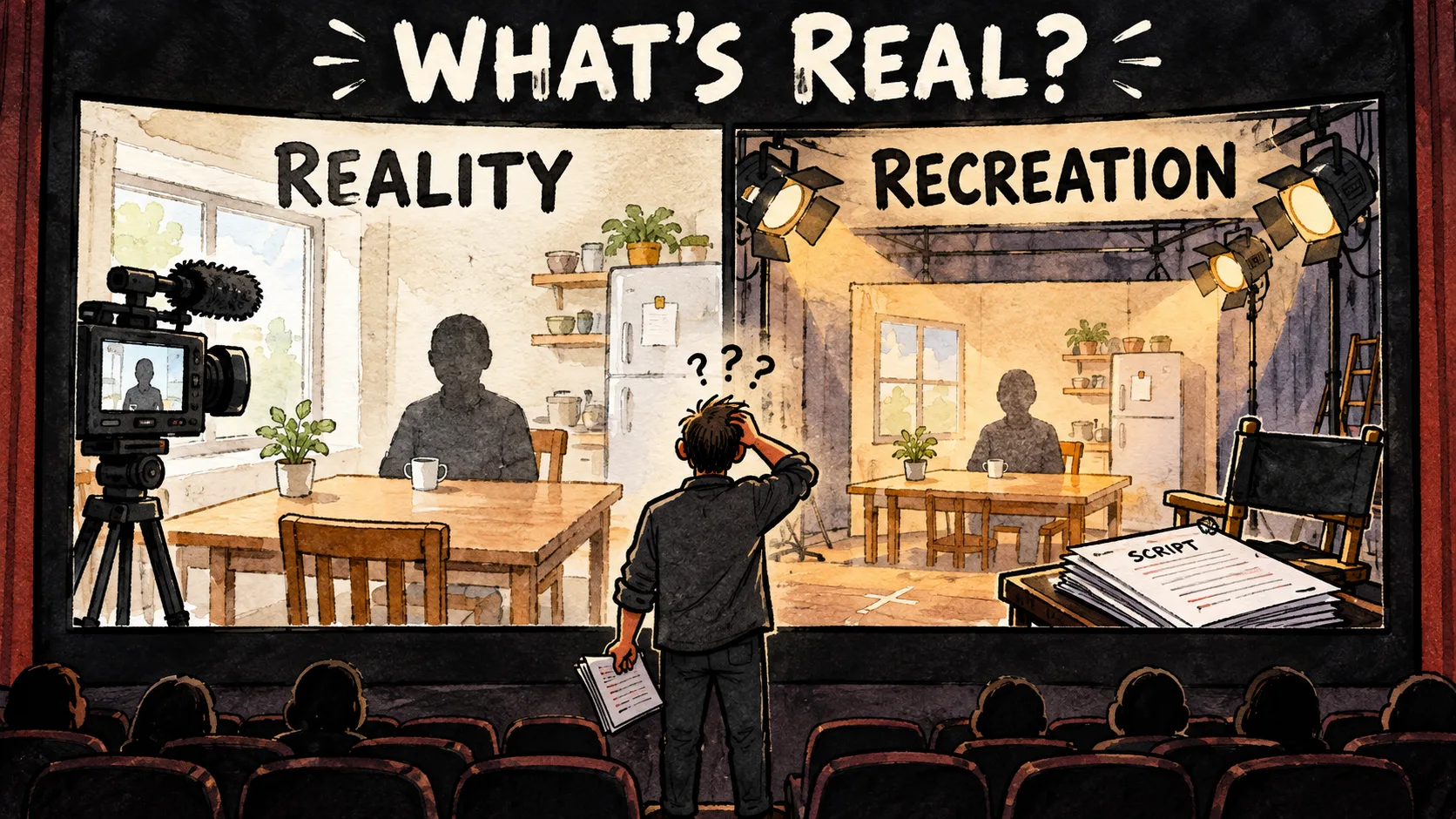
The final stretch of the film is built around a prison meeting Fielder could not bring cameras into. So he does the most Nathan Fielder thing possible: he describes the meeting to Amanda Seyfried, who played Holmes in Hulu’s The Dropout, and then re-enacts it with Seyfried once again performing as Holmes, per the film’s synopsis and Wikipedia’s production notes.
In that re-enacted conversation, Holmes is angry at Seyfried. She says other prisoners accuse her of things she did not do because they watched The Dropout. She says she knows what partner Billy Evans has been doing on the outside, the billboards with her face, the X account posting as her, the AI model of her likeness released to the public, and she defers to him on money because of the hundreds of millions in restitution she owes. Then she tearfully professes her love for Evans, who greets her on a visit with what Fielder believes is genuine affection.
The movie does not resolve it. Fielder and Seyfried are both left openly uncertain about Holmes’s true feelings and intentions. That is the ending: not a verdict, a shrug shared between the two people who have studied her most closely.
Then two lines of on-screen text land the real punch:
Evans relinquished his profit-sharing agreement before the film’s release. The controversial deal, negotiated before filming began, in which Evans asked for money for the documentary, was unwound before audiences ever saw a frame.
The New York Times stands by its reporter’s recollection of Holmes’ remark about The Dropout: “They’re not playing me. They’re playing a character I created.” It is the film’s last word, and its thesis in one sentence.
What is real and what is re-enacted
The structure matters for understanding any single scene. As NPR’s review puts it, the film is best treated as two movies stitched together. The first roughly 90 minutes are the straightforward part: in April 2023, thirty-four days before Holmes reported to prison to begin her eleven-year sentence, she and Evans invited Fielder and Oppenheim into the San Diego beach house they were renting. Everything there is documentary footage, up to and including Holmes reporting to Federal Prison Camp, Bryan and saying goodbye to Fielder.
The second roughly 90 minutes pick up two years later, with Holmes unavailable to film. That half leans on the Seyfried recreations, on Fielder narrating meetings the crew was not present for, and on the filmmakers’ stated approach of keeping their method for that section secret. NPR’s takeaway: it makes a much better impression as a blend of reality and invention than as a true documentary. Variety’s Owen Gleiberman calls it “reality-TV-as-hangout-movie psychodrama” made “with a spirit of true inquiry,” and named it a Critics Pick out of Telluride.
The Billy Evans money deal
The film’s biggest off-screen revelation is about the man behind the camera’s other subject. Fielder recounts a pre-production meeting where, after Holmes left the room, Evans asked for a deal to receive money for the documentary. A deal was negotiated despite the conflict-of-interest concerns. Holmes later told Fielder she would not receive any money from it.
That is what pushes Fielder and Seyfried toward the word “exploitation,” though Fielder admits on camera he cannot be sure Holmes was being truthful either. Evans, for his part, claims he posts as Holmes based on emails she sends from prison and that she knows “some” of the deal’s details. The closing text about the relinquished profit share is the film quietly settling that account.
What the ending means
Read the final line again: “They’re playing a character I created.” Across three hours, the film keeps returning to the same puzzle, Holmes insisting she has never told a lie, Holmes reframing her fraud trial as a misunderstanding over the word “can,” Holmes distressed by Seyfried’s portrayal and then claiming authorship of the persona itself. NPR notes Fielder’s “chin-stroking inability to decide what to think,” and that is the point: the ending refuses to separate the real Holmes from the performed one because, the film argues, she may not separate them either.
The story so far
April 2023: Holmes and Evans invite the filmmakers into their rental home 34 days before her sentence begins.
May 2023: Holmes reports to Federal Prison Camp, Bryan in Texas; Evans and the children relocate nearby.
September 6, 2026: the film premieres as a secret screening at Telluride and becomes the festival’s buzz event, per Variety.
October 16, 2026: A24 releases it in US theaters after it held a 100% Rotten Tomatoes critics’ score ahead of opening, per Forbes.
What this means for viewers
Go in blind if you can. The second half’s turn is the whole experience; even the filmmakers kept it secret. If you are unspoiled, close this tab and buy the ticket first.
Plan for the runtime: it is 174 minutes, so treat it like an event film.
Where to watch: exclusively in theaters right now, with showtimes on A24’s site and Fandango. No streaming date has been announced; industry reports expect it to land on HBO Max eventually under A24’s output deal.
What to watch next: the debate over what was real is the fun part. The “you can see everything ending explained” conversation on Reddit and X is already one of the weekend’s biggest film threads.






1 thought on “You Can See Everything Ending Explained: What Is Real, What Is Re-Enacted, and That Final Text”