Spoiler warning: this post explains the full ending of Kpop Demon Hunters. If you have not watched the Netflix film yet, stop here and come back after.
Kpop Demon Hunters ends with Rumi accepting both halves of herself, Jinu sacrificing his life to save her, and Gwi-Ma forced back from Earth as a new Honmoon is sealed. It is a conclusive ending for Huntrix, but the film deliberately leaves two doors open: the full story of Rumi’s demon father, and the fate of the surviving Saja Boys.
Quick answer: In the finale, Jinu betrays Rumi, then turns on Gwi-Ma and dies saving her. Rumi uses the last of his human spirit in battle, completes the Honmoon with Mira and Zoey, and banishes the demon king. Rumi keeps her demon side and finally stops hiding it.
Film: Kpop Demon Hunters (2025), Netflix, directed by Maggie Kang and Chris Appelhans.
Confirmed in the film: Rumi is half-demon; Jinu dies protecting her; the new Honmoon is sealed.
Interpretation, not fact: whether Jinu’s spirit survives inside Rumi. Voice star Arden Cho says she believes he lives on “somewhere magical,” per her Collider interview.
Where it sits in history: the film is Netflix’s most viewed movie ever, with 325.1 million views, per Deadline.
What happens at the end of Kpop Demon Hunters?
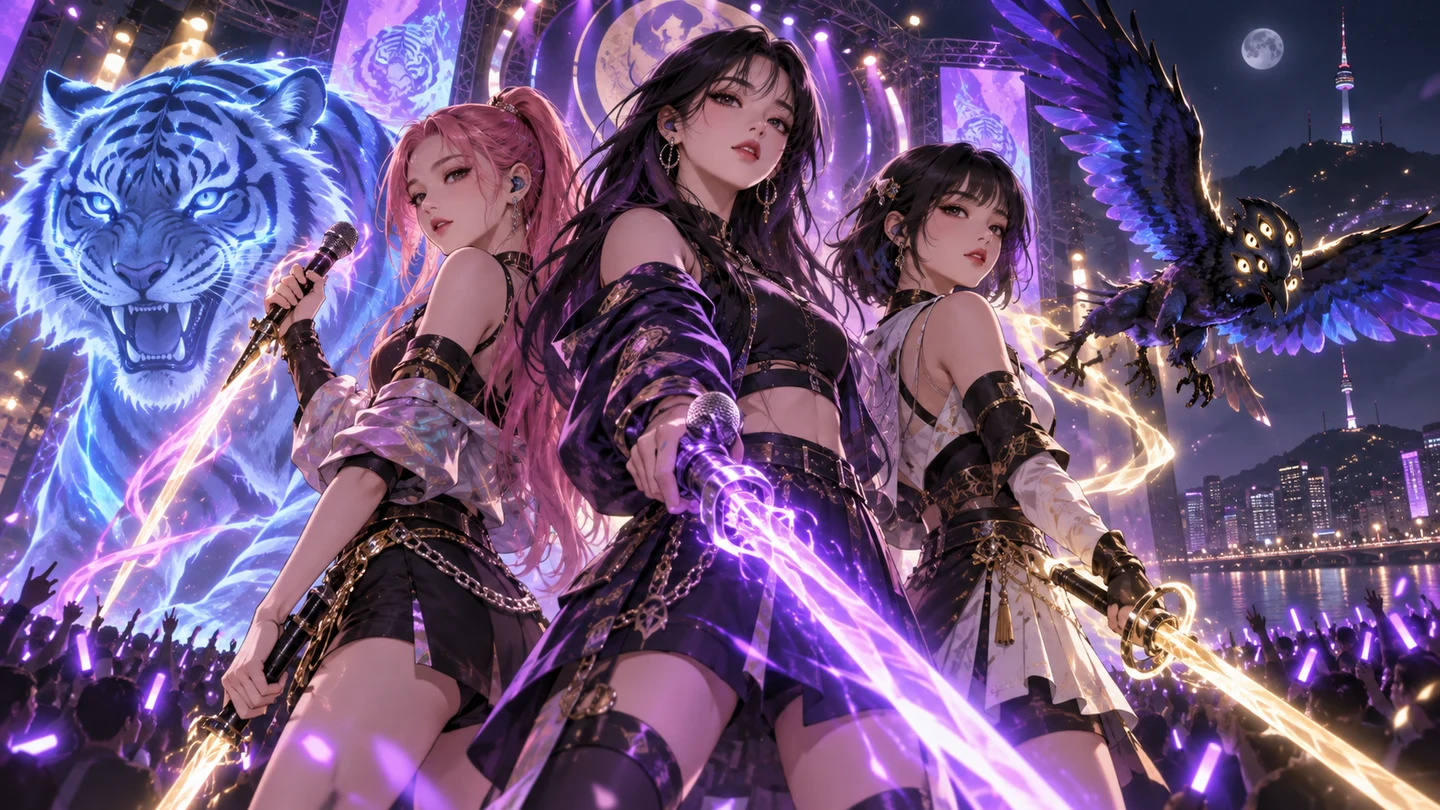
The final battle pits Huntrix against Gwi-Ma, the demon king who corrupts humans through bargains whispered into their minds. Jinu, the Saja Boys leader who spent the film as Gwi-Ma’s reluctant servant, betrays Rumi when her half-demon secret breaks, then reverses: he sacrifices himself to save her life during the climax, per ScreenRant’s ending breakdown. His human spirit lingers just long enough for Rumi to draw on it in the fight. Rumi, Mira and Zoey then complete the new Honmoon, the mystical barrier between Earth and the underworld, and Gwi-Ma and his hordes are forced back.
Is Jinu really dead?
What the film confirms: Jinu’s body is gone after his sacrifice, and the romance between him and Rumi never gets to happen. What the film leaves open: whether his spirit endures. Arden Cho, who voices Rumi, told Collider she refuses to call it a death: “I like to believe that in this magical universe, he’s just living within Rumi’s soul, or wherever, somewhere magical.” That is the actor’s interpretation, not canon, but the film supports the ambiguity on purpose. Fact vs. interpretation: dead on screen, possibly not gone from the story.
What is the Honmoon, and does Rumi fix it?
The Honmoon is the barrier that keeps the demon world out of Earth, and completing it was Rumi’s original plan to purge her own demon blood. Yes, a new Honmoon is sealed at the end, but the point is that Rumi no longer needs it to fix herself. Her arc, as ScreenRant’s analysis puts it, is rooted in accepting both sides of her nature, and that acceptance is what quells the corrupting influence in time for the climax. The barrier gets built. The self-loathing is what actually gets exorcised.
What does Rumi’s demon heritage mean?
Confirmed backstory: Rumi’s mother was a demon hunter who died when Rumi was an infant, and her unnamed father is a demon. Raised by her adoptive mother Celine, Rumi hid the demon patterns on her skin from everyone, including Mira and Zoey, and the reveal nearly splits Huntrix apart. The film never explains who her father is or how her parents’ story happened. That is not a plot hole; it is ammunition for a sequel.
Does the ending set up a sequel?
Yes, in three specific ways, all confirmed on screen: the mystery of Rumi’s parentage is unresolved; two members of the Saja Boys may have escaped the final battle and could return, as ScreenRant notes; and Gwi-Ma is banished, not destroyed, so his manipulation-and-bargain playbook can come back. Netflix has not officially announced a sequel film. Given the viewership record, expect movement.
What this means for fans
On a rewatch, track two things: every scene where Jinu’s humanity flickers before his betrayal lands differently once you know the ending, and Rumi’s earliest lines about the Honmoon read as self-erasure, not heroism. If you are waiting for a sequel, the realistic watch items are a Netflix announcement and any word from Kang and Appelhans; Cho has said the cast has ideas for a darker follow-up. And if the ending stung, that was the design. Cho told Collider the bittersweet cost is exactly what gives Rumi’s journey its impact.
Key story beats, in order
Centuries before the film: musician Jinu bargains with Gwi-Ma for a better life and becomes his servant.
Rumi grows up hiding her demon heritage under Celine’s protection.
Huntrix rises as a K-pop group and secret demon-hunting trio.
Rumi’s secret breaks; Jinu betrays her, then turns on Gwi-Ma.
Final battle: Jinu dies saving Rumi; his spirit aids her last stand.
Rumi, Mira and Zoey seal the new Honmoon; Gwi-Ma is forced back.
Ending: Rumi accepts both sides of herself; parentage mystery and surviving Saja Boys left for a sequel.
Analysis: the ending works because it refuses the easy version of both its arcs. A purely heroic Jinu would have cheapened the betrayal; a cured Rumi would have betrayed the film’s own theme. By sealing the Honmoon while letting Rumi stay half-demon, the film makes its actual argument: the monster was never her blood, it was the shame. That is why a story about idol demon hunters landed as Netflix’s biggest movie ever.